


Cryptocurrency for Beginners: A Clear and Simple Guide

Cryptocurrency has rapidly evolved from a niche digital curiosity into a notable component of the global financial landscape. Despite its growing popularity, many people still find the concept complex and intimidating.This article aims to provide a clear and simple guide to cryptocurrency for beginners, breaking down fundamental concepts, explaining how digital currencies work, and outlining practical steps for getting started. Whether you are curious about investing,using cryptocurrencies for transactions,or simply want to understand the basics,this guide will offer straightforward details to help you navigate the world of digital currencies with confidence.
Table of Contents
- understanding Cryptocurrency Technology and How It works
- Essential Steps to Safely Buy and Store Cryptocurrencies
- Evaluating Popular Cryptocurrencies and Their Use Cases
- Practical Tips for Minimizing Risks and Avoiding Common Scams
- The Conclusion

Understanding Cryptocurrency Technology and How It Works
Cryptocurrency technology is built upon a foundation of blockchain-a decentralized ledger that records every transaction across a network of computers. Unlike traditional currencies issued by governments, cryptocurrencies operate without any central authority, relying instead on cryptographic algorithms to secure and verify transactions. This system ensures transparency and immutability, meaning once data is recorded on the blockchain, it cannot be altered or deleted. Each transaction is grouped into a “block,” and these blocks are linked chronologically, creating a secure chain that is accessible to all network participants simultaneously.
The security and functionality of cryptocurrencies come from several key features:
- Decentralization: No single entity controls the network, reducing the risk of fraud or manipulation.
- Encryption: Complex cryptographic techniques protect users’ identities and secure transactions.
- Consensus Mechanisms: Processes like Proof of Work (PoW) or Proof of Stake (PoS) validate transactions and add new blocks to the blockchain.
- Digital Wallets: These are software tools that allow users to store and manage their cryptocurrency safely.
| Feature | Purpose | Example |
|---|---|---|
| Decentralization | Eliminates central control | Bitcoin Network |
| Encryption | Protects transaction data | Elliptic curve Cryptography |
| Consensus Mechanisms | Validates and secures the network | Proof of Stake (Ethereum 2.0) |
| Digital Wallets | Stores and manages coins | MetaMask, Ledger |

Essential Steps to Safely Buy and store Cryptocurrencies
When entering the world of digital assets, the first priority is to choose reputable platforms for buying cryptocurrencies. Reliable exchanges typically offer robust security measures,transparent fee structures,and user-friendly interfaces. Always opt for platforms that enforce two-factor authentication (2FA) and have a solid track record of protecting user funds. Avoid impulse purchases by researching prices across different exchanges and taking note of trading volumes to ensure liquidity. Remember, starting small and increasing your investment as your understanding grows is a prudent approach.
Storing cryptocurrencies requires equal caution to prevent unauthorized access or loss. Hardware wallets or cold storage solutions are the preferred method for safeguarding your digital assets as they keep private keys offline. For everyday transactions, reputable multi-factor authenticated software wallets can suffice but focus on wallets that offer seed phrase backups and encrypted private keys. it’s critical to never share your private keys or seed phrases with anyone and to keep multiple backups in secure locations. Below is a speedy comparison of popular storage options:
| Storage Type | Security Level | Ease of Use | Best For |
|---|---|---|---|
| hardware Wallet | high | Moderate | Long-term storage |
| Software Wallet | Medium | high | Daily transactions |
| Exchange Wallet | Low to Medium | High | Trading only |
- Verify all URLs and use official apps only.
- Regularly update wallet software for security patches.
- Backup seed phrases securely offline, never digitally.
- Enable 2FA wherever possible.

Evaluating Popular Cryptocurrencies and Their Use Cases
Bitcoin (BTC) remains the pioneer and most widely recognized cryptocurrency,primarily used as a digital store of value and a decentralized option to traditional money. Its security and widespread acceptance make it ideal for long-term investment and peer-to-peer transactions without intermediaries. however, its slower transaction speeds and higher fees compared to newer cryptocurrencies limit its everyday use in small purchases.
Ethereum (ETH) differentiates itself by enabling smart contracts-self-executing contracts with the terms directly written into code-making it the backbone for decentralized applications (dApps) and the booming decentralized finance (DeFi) sector. Other notable cryptocurrencies include Ripple (XRP), popular for fast and low-cost cross-border payments, and litecoin (LTC), valued for quicker transaction confirmations.
| Cryptocurrency | Main Use Case | key Feature |
|---|---|---|
| Bitcoin (BTC) | Store of Value | Decentralized, Secure |
| Ethereum (ETH) | Smart Contracts & dApps | Programmable Blockchain |
| Ripple (XRP) | Cross-border Payments | Fast & Low Fees |
| Litecoin (LTC) | Everyday Transactions | Faster Confirmations |
Practical Tips for Minimizing Risks and Avoiding Common Scams
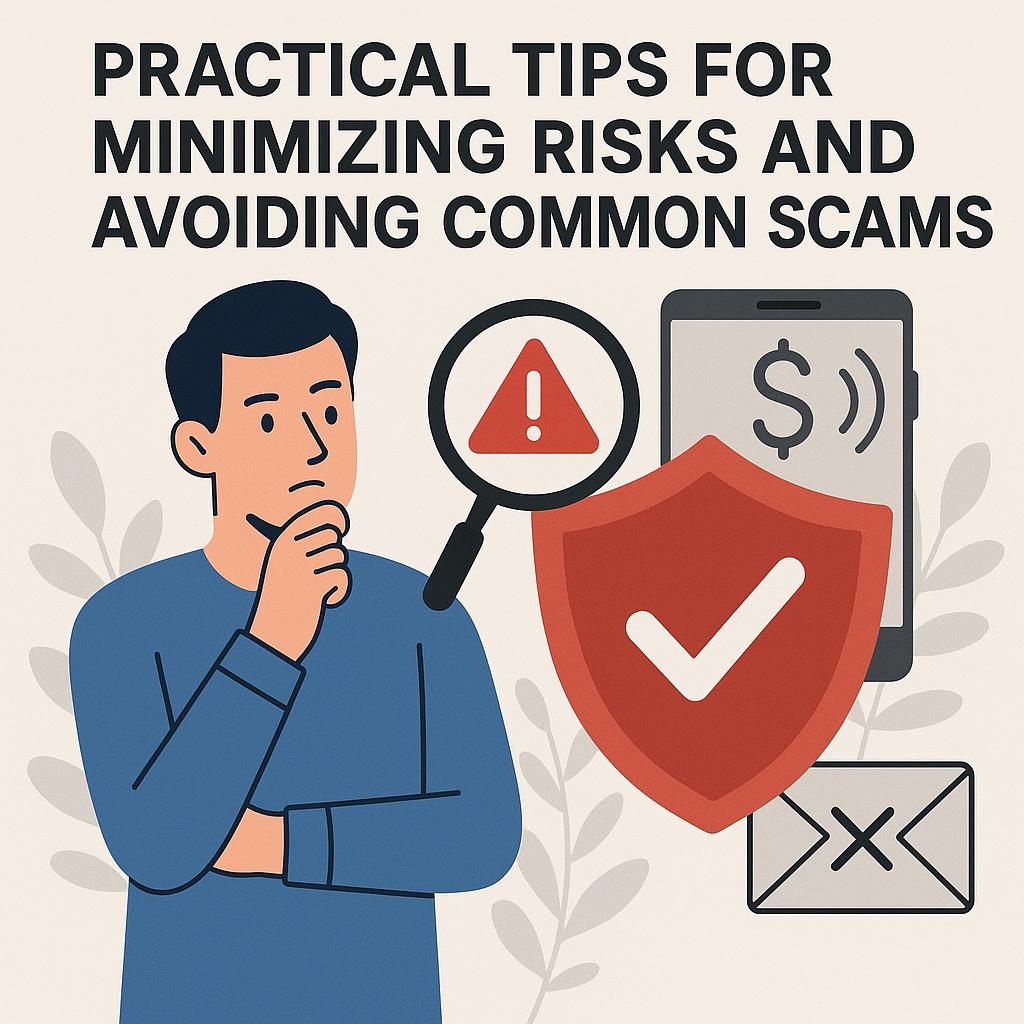
When venturing into the world of cryptocurrencies, safeguarding your assets shoudl be your top priority. Always use two-factor authentication (2FA) on all your accounts to add an extra layer of security. Be cautious of unsolicited messages or emails that promise guaranteed returns or ask for personal information-these are hallmarks of common scams. Additionally, avoid clicking on suspicious links and double-check URLs to ensure you are visiting official websites. When choosing a crypto wallet or exchange, prioritize those with strong reputations, transparent security measures, and positive user reviews to minimize risks of fraud or hacking.
Understanding how to recognize potential scams can save you from significant losses. Here are some practical red flags to watch out for:
- Unrealistic promises: Be skeptical of schemes offering guaranteed profits or “get rich quick” outcomes.
- Pyramid structures: Avoid investment opportunities that require recruiting others to earn rewards.
- Impersonation: Verify identities carefully; scammers frequently enough impersonate well-known figures in the crypto space.
- Lack of transparency: Stay away from platforms that provide little or no information about their team or operations.
| Common Scam Type | Warning Sign |
|---|---|
| Phishing | Fake websites or emails asking for credentials |
| Ponzi Scheme | Returns paid from new investors’ funds |
| Fake icos | Unregistered token sales with no clear use case |
| Sextortion | Threatening messages demanding crypto payments |
The Conclusion
understanding the fundamentals of cryptocurrency is an essential step for anyone interested in exploring this innovative financial technology. By grasping key concepts such as blockchain, wallets, and transaction processes, beginners can navigate the crypto landscape with greater confidence and awareness. While cryptocurrency presents unique opportunities, it also carries risks that require careful consideration and ongoing education. As the market continues to evolve, staying informed will remain crucial for making sound decisions in this dynamic space.


Leave a Comment